All articles

Loop Builder vs Blog Module in Divi 5: Which One Should You Use?
Divi 5 has two ways to show a post feed: the simple Blog module and the flexible Loop Builder. Here's exactly what each does, a side-by-side comparison, and a simple rule for choosing the right one.
Divi 5 for Affiliate Websites: Better Review Templates With TOC, Breadcrumbs and Dynamic Content
Build a review template that ranks and converts in Divi 5 — without a stack of review plugins. Table of Contents and Breadcrumbs for SEO, a rating box and honest pros/cons, plus dynamic content and the Loop Builder to scale it.

How To Build a Case Study Page in Divi 5 With Timeline, Tabs and Nested Elements
Build an agency case study page in Divi 5 that actually persuades: the new Timeline module for the project journey, Tabs to organise screenshots, nested elements for rich sections, and dynamic content to templatise it.
Breadcrumbs and Table of Contents in Divi 5: SEO Building Blocks for Content Sites
Two of Divi 5's new modules — Breadcrumbs and Table of Contents — are pure SEO and usability infrastructure. Here's what each does and how to wire both into a Theme Builder post template so every article gets them automatically.
Creating a Responsive Menu in Divi 5: Why the New Link and Dropdown Modules Matter
Divi 5 replaces the old single Menu module with composable Link and Dropdown modules, Menu Loops, and Canvas-based mobile menus. Here's why that shift gives you more control — and how to build a responsive menu with it.

Cross-Canvas Interactions in Divi 5: Popups, Sidebars and Mega Menus Without Custom Code
Divi 5's Canvases and Interactions let you build popups, off-canvas carts, slide-in panels and mobile menus inside the Visual Builder — no popup plugin, no JavaScript. Here's the model and five components to build.
How To Build a Product Roadmap in Divi 5 With the Timeline Module
Build a public product roadmap on your SaaS landing page in Divi 5 — no roadmap tool, no JavaScript. A step-by-step Now/Next/Later build with the new Timeline module, plus how to keep it maintainable.

Divi 5 Timeline Module: 12 Real Website Sections You Can Build With It
The new Divi 5 Timeline module is a flexible layout primitive, not a dates-only widget. Here are 12 real sections you can build with it — from company history and product roadmaps to course curricula and WooCommerce order journeys.
Is Hostinger a Good Choice for Content Creators and Affiliate Sites?
Cheap, fast site launches, WordPress with AI automation, content tooling and bundled email. How well Hostinger fits the niche-site and affiliate playbook in 2026.
Hostinger for an Online Store: When It's Enough vs Shopify or WooCommerce
Selling online? We compare Hostinger's store and Horizons against Shopify and WooCommerce by what you sell — small catalogue, digital, subscriptions, growing brand.
Hostinger Website Builder vs Wix: Cheaper Builder, or Too Many Compromises?
Hostinger's cheaper AI builder vs Wix's deeper, pricier one. We compare price, AI features, app marketplace, e-commerce, integrations and the limits.

Themify Turns 16: 40% Off Memberships and $75 Off Lifetime Club (Until August 31)
Themify is celebrating its 16th anniversary with 40% off regular memberships (code ANNIV16) and $75 off the Lifetime Club (code ANNIV16LIFE). The sale runs until August 31, 2026 — and for a theme shop, sixteen years of history is a selling point in itself.
Hostinger vs SiteGround vs Bluehost: Best WordPress Host in 2026?
Hostinger, SiteGround and Bluehost compared for WordPress in 2026 — price, performance, support, AI tooling and the renewal trap. Who should pick which.

Your Photo Library Finally Has No Excuse: pCloud Is Giving Away 500 GB for 3 Months
Photography Day deal: 500 GB of Swiss cloud storage free for three months (August 10–22). Here's how to actually put it to work on your photo chaos.

SEOPress 10.1: the AI metadata feature leads, but robots.txt revisions are the one that saves sites
The new release auto-generates meta titles and descriptions the moment you publish, adds ProductGroup schema for WooCommerce variable products, and gives robots.txt a version history. One of those prevents a category of disaster; one deserves more caution than the announcement suggests.

LifterLMS says 1.7 million downloads. WordPress.org says 10,000 active installs. Both are true.
Picking a WordPress LMS means reading vendor numbers carefully. The gap between cumulative downloads and active installs is the clearest example, and understanding it tells you more about choosing course software than any feature table.
Why You Should Back Up Photos Outside Google and Apple
All your memories in one company's account is a single point of failure. Why a second, independent, cross-platform copy matters — and how pCloud fits.

Page Builder vs Theme Builder: the WordPress Distinction That Decides What You Can Change
A page builder designs the pages you make. A theme builder designs the hundreds your site generates — archives, single posts, product pages, the 404. Which you need, why WordPress already ships one, and the lock-in nobody mentions.

Why Your WordPress Site Randomly Slows Down — and Why WP-Cron Is Usually Behind It
WP-Cron has no clock. It runs scheduled work when a visitor loads a page, which means backups and imports fire on a real person's request. How to confirm it's your problem, how to fix it properly, and the one-line mistake that silently stops your scheduled posts.

SureRank Turns One: Pro Plans Up to 47% Off — but Check the Free Version First
Brainstorm Force's WordPress SEO plugin is running a birthday sale until August 3. Full pricing for all four tiers, the lifetime-vs-annual calculation most people get wrong, and why the free version is where most site owners should stop.
WP Rocket MCP Adds OAuth for Claude — and Quietly Removes a Password From Your Laptop
Connecting WP Rocket's MCP server to Claude no longer needs a WordPress application password or a config file — OAuth does it in four clicks. Why the easier route is also the safer one, the cleanup job for anyone who set it up the old way, and the two limits the announcement skips.

Stop Renting Cloud Storage: pCloud's Summer Lifetime Sale (Up to 50% Off)
Tired of renting the same cloud storage every month? pCloud's Summer Sale makes its lifetime plans up to 50% off from July 27 to August 9, 2026 - buy 2TB outright for EUR299. How it compares to Google One and iCloud, and the caveats.
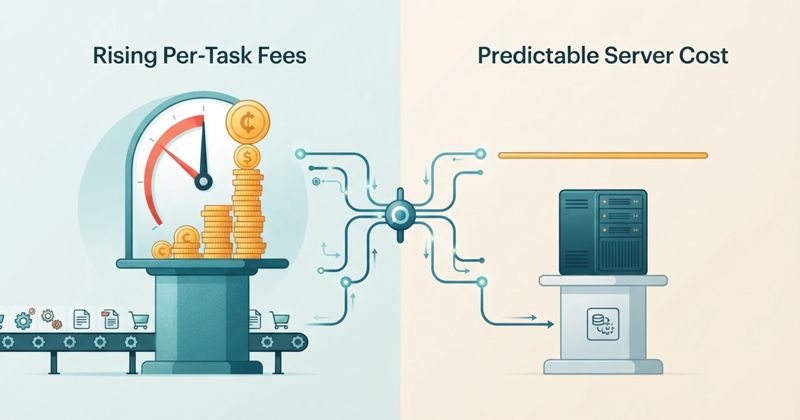
Cut Subscription Costs by Self-Hosting Your Automations With n8n
Per-task automation bills add up fast. Self-hosting n8n lets you own your workflows and drop the metered pricing - but only if the break-even math and your willingness to maintain a server actually add up. An honest guide.

10 Useful n8n Automations for Solopreneurs and Small Teams
Ten concrete n8n workflows that quietly handle the glue-work of running a small business - from lead capture and invoice reminders to AI content triage - and how to build your first one without code.

Musk Promised a Full AI 'Odyssey' by Year-End. The Viral Clip Shows Why That's a Stretch
A three-minute AI-generated Odyssey scene made with Grok Imagine went viral, and Musk promised a full 'historically accurate' AI film by year-end. It's a real leap for AI video - but the clip's anachronisms (and Grok's own 'low odds') show where the hype outruns reality.
Best Family Cloud Storage: pCloud Family vs Google One vs iCloud+
One plan, private space for everyone. We compare pCloud Family, Google One and iCloud+ — pay-once vs subscription, separate logins, cross-platform.

One Dead LED Shouldn't Kill Your TV - but Sometimes the Software Says Otherwise
A UK repair tech showed that on some TVs a single failed backlight LED triggers a firmware shutdown that bricks the whole set - and how it can be bypassed. What's true, what's unproven about the 'planned obsolescence' claim, and why a dead-looking TV is often repairable.

AppSumo's "The Deal Is Right": 11 Lifetime Deals to Replace Your Monthly Subscriptions
AppSumo's 'The Deal Is Right' event bundles 11 one-time lifetime deals that stand in for monthly subscriptions like Zendesk, Zapier, Typeform and ElevenLabs. The full lineup, how the pricing works this week, and an honest checklist before you buy. Ends Friday, July 24.

Your Content Did Everything Right — AI Still Skipped It: AEO Is an Infrastructure Problem
AI crawlers like GPTBot and ClaudeBot work on a time budget — if your WordPress site responds slowly, renders content with JavaScript, misses its cache or blocks the wrong bots, your content never gets evaluated. The 30-second View Source test, the four WordPress failure modes, and how to fix them.

Livid Lifetime Deal: Ditch Your Vimeo Subscription for a One-Time $39
Livid hosts branded, ad-free videos with password protection, embed controls and playback heatmaps — and migrates your whole Vimeo library in a few clicks. On AppSumo it's a lifetime deal from $39 with a 60-day money-back guarantee. What you get, the tier limits, and who should skip it.

How to Sell Digital Products on Shopify (Free App)
Shopify Digital Products is a free, first-party app for selling ebooks, templates, audio, video — and now course/membership/booking access from Teachable, Kajabi, Calendly and more. How it works, what it really costs, and how to go from signup to first sale in minutes.

Apple's New AI Siri Reaches the Public Beta — What to Actually Expect
Apple's long-delayed AI Siri overhaul is now in the iOS 27 public beta, opening the reboot to everyday iPhone owners for the first time. Here's what the new Siri can do, how to try it, the device caveats — and why a healthy dose of skepticism is warranted given Apple's repeated Siri delays.
pCloud vs Google Drive: What You Gain and Lose Leaving Google
Thinking of leaving Google Drive? We compare pCloud and Drive on price, privacy, data region, collaboration and ecosystem — and who should switch.

Google Images Turns 25: From a Viral Dress to AI-Generated Search
Google Images is 25. It started because Jennifer Lopez's 2000 Grammys dress broke the web and text results couldn't keep up. Here's the 25-year journey from 'search by image' to Lens and Circle to Search — plus the anniversary's new personalized Images home and in-search image generation.

5 Best WordPress Page Builders in 2026 (And Which One Fits Your Project)
The best WordPress page builder in 2026 depends on what you're building. We break down five worth your time — Elementor, Divi, Bricks, Beaver Builder and the native Block Editor — and which one fits freelancers, agencies, developers and content sites.

SureDonation: A Free WordPress Plugin to Run Fundraising Campaigns
SureDonation is a new free WordPress plugin from Brainstorm Force that handles fundraising end to end: campaigns, goals with live progress, Stripe/PayPal/offline payments and donor tracking in one place. Here's what it does, who it's for, and what to check before you build on it.
WP Rocket Adds an MCP Server: Now Claude and Codex Can Read Your Site's Performance Data
WP Rocket is becoming the first WordPress performance plugin with an MCP server — letting AI assistants like Claude and Codex read Rocket Insights scores and adjust WP Rocket settings, with your approval. Here's what it does and why it matters for agencies.
How F-Secure banking and shopping protection keeps your payments safe
Plain antivirus scans files. F-Secure's Banking Protection does something different: it hardens the exact moment you log into your bank or check out of an online store. Here's how it works, how to turn it on, and what it does — and doesn't — cover.

FluentPlayer's EarlyBird Lifetime Deal: A WordPress Video Player Built to Convert
The team behind FluentCRM launches FluentPlayer — a next-gen WordPress video player with in-video forms, CTAs and analytics — at a one-time lifetime price. What is in the EarlyBird deal, and who is it for.
F-Secure Total 2026 review: one bundle for antivirus, VPN, and your identity
F-Secure Total folds antivirus, an unlimited VPN, a password manager, identity monitoring, and scam protection into a single Finnish-made subscription. After a close look at the 2026 release, here is what it does brilliantly, where it falls short, and who should buy it.
Shopify vs Wix eCommerce in 2026: Small Shop or Growing Brand?
Shopify and Wix both sell online but suit different sellers. We compare them by real scenarios — local shop, brand, B2B, bookings and AI sales channels.
Linux Phones Explained: Why Commodore's Callback 8020 Is Different
Commodore's Callback 8020 doesn't run Android or iOS-it runs Sailfish OS, a Linux mobile system. What a Linux phone really is, how it runs Android apps, and the app-gap caveat.
WP Rocket 3.22 Puts a Built-In CDN Inside the Plugin: What RocketCDN Free Gives You
WP Rocket 3.22 is live and its headline feature is a built-in CDN: RocketCDN now runs inside the plugin, speeding up your top pages from 10 global edge locations with unlimited bandwidth — included with every license.

The Best First Steps After a Massive Password Leak
A 24-billion-record leak sounds apocalyptic, but your response is small and calm. A non-technical home-user checklist: check your email, fix reused passwords, turn on 2FA, scan devices.

Vodien Web Hosting Deal: 10% Off New 1- and 2-Year Plans
Vodien — Singapore's long-running premium web host — is offering 10% off new 1-year and 2-year shared hosting plans. Here's what you get, who it's for, and how to claim it.

How to Build a Low-Distraction Phone Setup Without Buying a $500 Dumbphone
You don't need a $499 dumbphone to cut distraction. This one-evening checklist uses the notification, app-limit, grayscale and work-profile tools already on your iPhone or Android.
Refurbished Tech Checklist: What to Check Before Buying a Used Laptop, Phone, or Tablet
Refurbished tech saves money — or hands you someone else's problem. A pre-purchase checklist for used laptops, phones and tablets: account locks, battery health, software support, carrier locks and a physical once-over.

The Return of the Flip Phone: Is Digital Minimalism Finally Going Mainstream?
Commodore's $499 Callback 8020 flip phone is a signal: a hardware brand betting that people want a phone that does less. We unpack whether digital minimalism is actually going mainstream.

AI Gadgets Worth Buying vs AI Gadgets That Are Mostly Hype
Some AI features genuinely change a device; others are buzzwords on ordinary functions. Here's a clear split of AI gadget features worth buying versus mostly hype — and how to decide at the shelf.
UWB Explained: The Technology Behind Precise Finding and Hands-Free Unlocking
UWB is the precision-location tech behind hands-free unlocking, pinpoint device finding and secure digital car keys. Here's how ultra-wideband works, where it shows up, and why its accuracy is a security feature.

How to Cut Tech Subscriptions Without Losing the Tools You Actually Use
Tech subscriptions are a quiet budget leak. A step-by-step audit: find every recurring charge, cut the unused and duplicates, rotate seasonal services, and switch keepers to cheaper annual billing.

Physical AI and Home Robots: Why Robotics Is Back in the Spotlight
Physical AI — robots that move, see and grip — is back in the spotlight. Here's why now, what's real versus hype, what it means for homes, and who should actually care today.
Build a Website in 10 Minutes with AI: Webnode vs Wix (2026)
Both Webnode and Wix now build a site from a single prompt. We compare them for small businesses in 2026 — design, SEO/GEO, edit speed and price.

Wi-Fi 7 Explained: Should Home Users Care Yet?
Wi-Fi 7 is a real upgrade — faster, lower latency, Multi-Link Operation — but most homes won't feel it yet. Here's what it changes, why your devices and internet plan matter more, and when Wi-Fi 6 is still enough.

How to Protect Your Privacy on AI Apps and Smart Devices
A practical privacy checklist for AI apps and smart devices: audit permissions, tame voice recordings, control cloud sync, never paste secrets into chatbots, and lock down the accounts behind your devices.

Coosub Review: Is the Shared-Subscription Marketplace Worth It?
Coosub pools premium streaming and AI subscriptions into cheap shared seats — Netflix, Spotify, ChatGPT Plus and more. We review the catalogue, pricing, savings and the real safety trade-offs.

Matter vs Thread vs Wi-Fi vs Bluetooth: Smart Home Standards Explained
Matter, Thread, Wi-Fi and Bluetooth aren't rivals — they're different layers. Here's the language-vs-road distinction, what each is best at, and how to choose the right one for each smart home device.
Edge AI Explained: Why More Devices Process Data Locally
Edge AI runs models on your device instead of the cloud. Here's what 'edge' means, the real benefits — privacy, speed, offline use — the trade-offs, and where you already rely on it.

How to Choose a Smartphone for AI Features
Every phone claims to be an 'AI phone.' Here's what actually matters: the chipset and NPU, RAM, on-device vs cloud processing, camera AI, and the update policy that keeps features coming.
Privacy-First Tech: Why More Gadgets Are Promising Local Processing
More gadgets now advertise local processing, on-device AI and encrypted storage. Here's what 'privacy-first' hardware really means, why it's happening now, and how to tell genuine privacy from marketing.
How to Build a Smart Home Starter Kit Without Buying Random Gadgets
Build a smart home from use cases, not random gadgets. Pick an ecosystem, favor Matter and Thread, then add plugs, a speaker and a few sensors. A starter kit that grows without the dead-gadget drawer.

Smart Glasses, AI Pins, and Wearable Cameras: Useful Future or Privacy Problem?
Smart glasses, AI pins and wearable cameras are back and finally useful — but always-on sensing makes privacy everyone's problem. The real upsides, the structural risks, and how to use one responsibly.

AI PCs in 2026: Should You Buy a Laptop With an NPU?
Every 2026 laptop is an 'AI PC' with an NPU. Here's what the NPU actually does, when it's worth chasing, and why RAM, SSD, display and battery still decide how good a laptop feels.

Corel's August Sale: 50% Off Painter & VideoStudio, 10% Off CorelDRAW + Free Unlimited AI (Ends Aug 16)
Corel's mid-August round splits in three: Painter and VideoStudio at a flat 50% off until August 16, CorelDRAW at just 10% with code DRAW10 — but sweetened by unlimited free AI generations until August 17 — and two FX add-ons discounted automatically until September 3.
15 Everyday Tech Mistakes That Cost You Money, Privacy, or Performance
Most tech trouble comes from small everyday habits. 15 common mistakes that cost you money, privacy or performance — from reused passwords and forgotten subscriptions to skipped backups — and the quick fixes.

Best Tech Gadgets for Small Apartments
Small spaces punish clutter. A buying guide for studios and small apartments: compact, multipurpose tech — smart plugs, a smart display, a slim robot vacuum, a mini projector — that saves space and adds capability.
What Is an NPU and Why Is It Showing Up in New Laptops?
An NPU is a chip built to run AI efficiently at low power. Here's what it does on your devices, how it differs from the CPU and GPU, why it's suddenly everywhere, and whether it should change what you buy.

How to Choose a Laptop in 2026: CPU, GPU, NPU, RAM, Battery, and Display Explained
A no-nonsense 2026 laptop buying guide: what CPU, GPU, NPU, RAM, battery and display actually do, the specs that decide how a laptop feels, and how to match one to students, creators or gamers.

Matter and Thread Smart Home Devices: Why Compatibility Is Finally Improving
Matter and Thread finally make smart home gear work across Apple, Google and Amazon. Here's what each standard does, why compatibility improved, the rough edges, and how to buy in 2026.

AI Phones Are Becoming Personal Agents: What That Means for Apps
Phone AI is shifting from voice assistants to agents that act across your apps. Here's what that means for how you use apps, search, payments and travel — and the privacy controls to set first.

Run Your Own Private AI: Self-Hosting Ollama on a VPS
Ollama runs open AI models on hardware you control. On a VPS it becomes a private, always-on AI endpoint with no per-token fees. Here's why, who it's for, and a realistic performance check.